
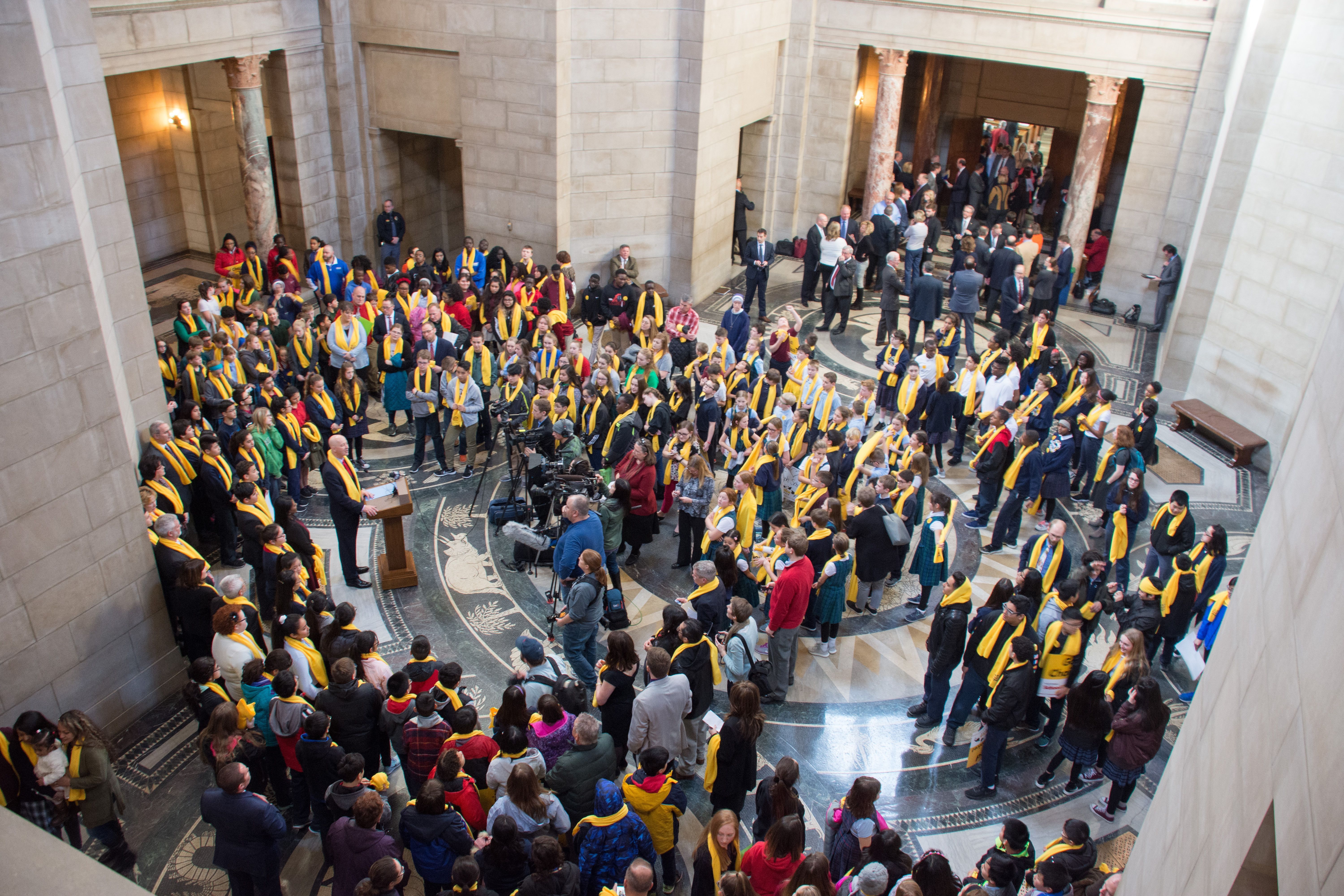
The Capitol Update is a regularly occurring column authored by staff members of the Nebraska Catholic Conference and published in diocesan news publications. It provides the latest public policy updates on state and federal legislative policy.

As Catholics we have an obligation to ensure we do what we can to advance the cause of life not just through prayer, education of the general public, and pastoral care, but also through our public policy advocacy efforts.
In reviewing voter guides, it can be helpful to look up organizations that share your values. But it can be equally helpful to look up organizations you disagree with. All these voter guides can provide important data points on candidates, which can contribute to your fuller evaluation of them and your moral decision-making as a voter.
The Nebraska Catholic Conference was privileged to take part in an effort in 2024 to pass Nebraska’s Pregnancy Help Act, which establishes that it is “the policy of the State of Nebraska… to encourage and celebrate pregnancy help organizations.”
On Thursday, Sept. 17, at 7 p.m. at The Post (located in Lincoln in the Telegraph District area), the Nebraska Catholic Conference is hosting “Bishop & Brews.” This Theology-on-Tap-style event will feature Bishop James Conley and other notable panelists for an in-depth discussion on Magnifica Humanitas, Pope Leo XIV’s recent encyclical on safeguarding the human person in an age of AI.
If you’re in the Omaha or Lincoln area on Wednesday, September 16 or Thursday, September 17, respectively, join the NCC for an intriguing panel discussion on artificial intelligence.
Our Catholic faith calls us to dutifully participate in civic life. Jesus calls us to bring our faith into every aspect of who we are and what we do. He calls us to be a light to the world, and salt of the earth. We shouldn’t separate our faith from our public life.

The EFTC is a federal school choice program that was passed in the 2025 budget reconciliation act (also known as the “One Big Beautiful Bill”). It will provide education choice funding to students across the country.
It can sometimes happen that a person reading two things at once—two books, or a book and an essay, or a poem and a newspaper column—will find an unexpected and remarkable relationship between the two things being read, each illuminating and giving color to the other.
We are therefore continuously encountering successive forks in the road where we must decide whether and how to create and/or use proposed and emerging technologies. For those of us who are using technologies that promise to make our life more efficient, convenient, or comfortable, we are challenged to ask ourselves: What is my relationship to this thing? How is it affecting me? How is it affecting my family?
This evidence of Divine Revelation affirms the supreme dignity of the human person. We are made “in the image and likeness of God.” God looks on us and says we are “very good.” God has a particular love for the human person. The human person cannot be stripped of this dignity. Our infinite and invaluable worth, in the eyes of God, cannot be reduced to anything less than this magnificent reality.
Thousands of Nebraska K-12 students are set to lose out on education scholarships that will help them continue attending a school that is best for them. These scholarships are helping students achieve better academic outcomes and become the person God has called them to be.
In the midst of this fanfare, one of our major pro-life bills (LB669) recently failed to advance from first round of legislative debate. LB669 would protect women experiencing domestic abuse or human trafficking and who are being coerced into abortion.

Let our Marches and Walks for Life be an occasion for three things: to remember the departed unborn and bear witness to their lives; to pray that we might start becoming who God wants us to be; and to begin recruiting others for a campaign of families and individuals determined to live fully human lives in faithful solidarity and friendship.

The 109th Nebraska Legislature, Second Session, is off to the races—and, at the time of publication of this column, they’re already on Day 3 of their 60-day (“short”) session which will run until early April.
St. Pope John Paul II once said: “We are not the sum of our weaknesses and failures, we are the sum of the Father’s love for us and our real capacity to become the image of His Son Jesus.”

The Bishops underscore both the need to recognize the fundamental dignity and transcendent nature of the human person, including immigrants, through “meaningful” immigration reform and the protection and regulation of borders to “establish a just and orderly immigration system for the sake of the common good.”
Christ the King gives us the opportunity to consider the graces and obligations bestowed on our political leaders, who are called to lead us by the authority of God toward peace, justice, and mercy. That obligation and grace falls to us, as well, as citizens. We are called to build a society of peace, justice, and mercy with our neighbors—both those we love and those we consider our enemies.

On November 6, Governor Jim Pillen signed an executive order revoking Planned Parenthood’s eligibility (and the eligibility of all abortion providers) to receive Medicaid funds in Nebraska.
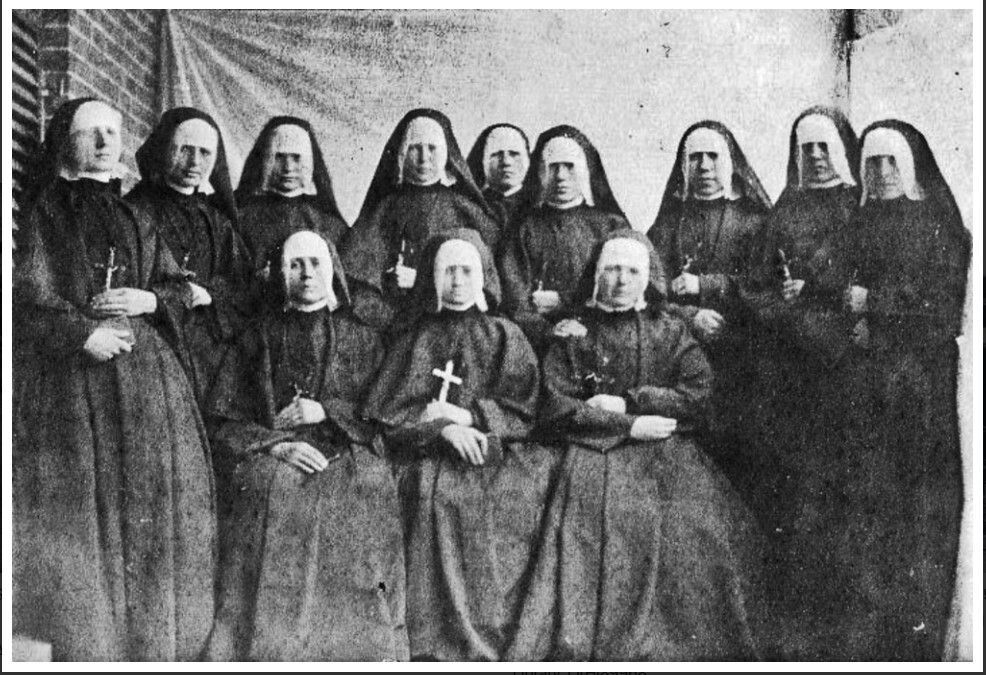
Catholic schools in what is now America predate the American founding by 170 years. The first known Catholic school to open in the present United States was founded in St. Augustine, Florida, in 1606.
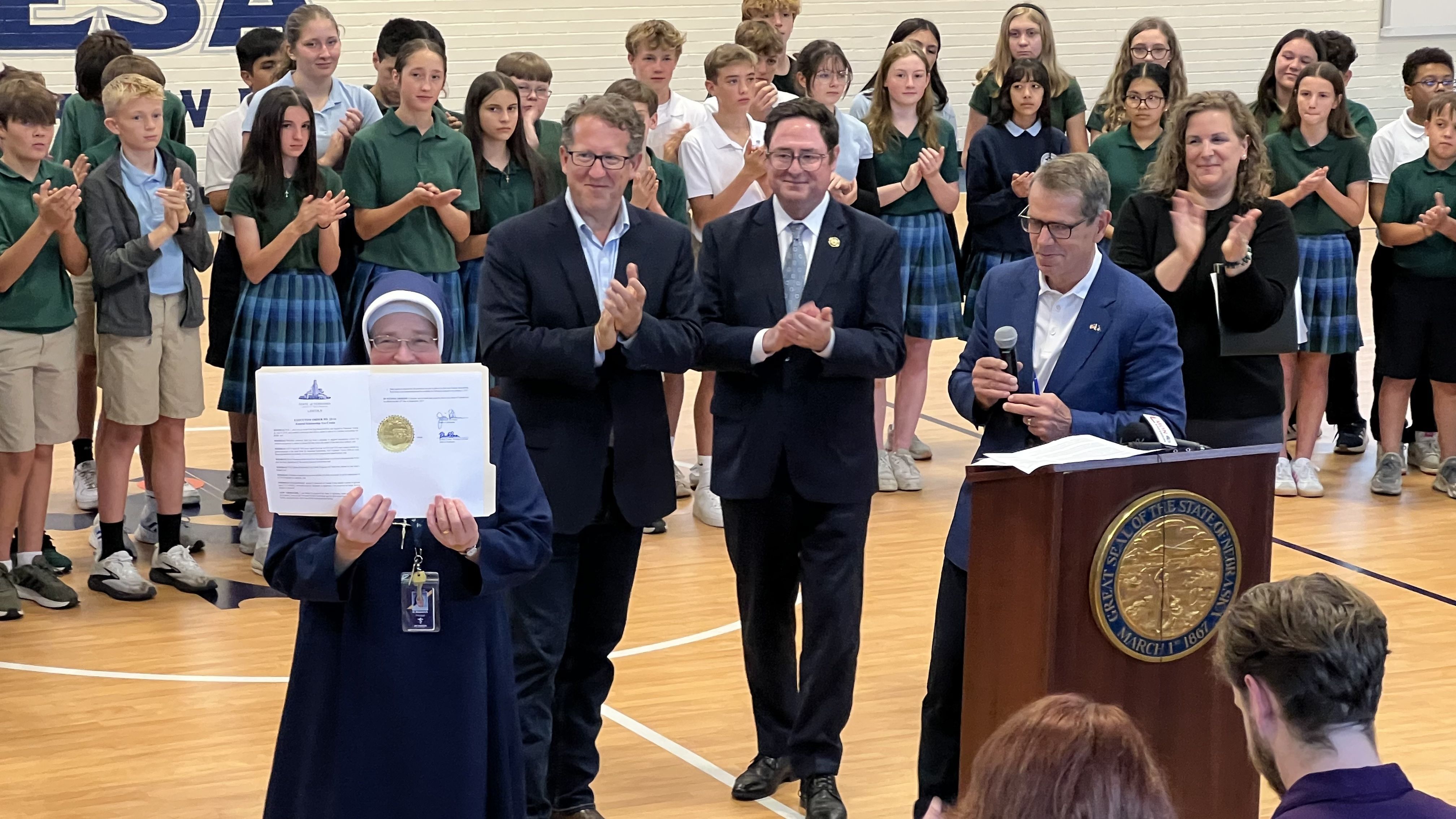
School choice programs come in various shapes and sizes. This federal program is a scholarship tax credit. A scholarship tax credit allows taxpayers to receive an income tax credit for contributions to a scholarship granting organization which will turn those funds into education scholarships.
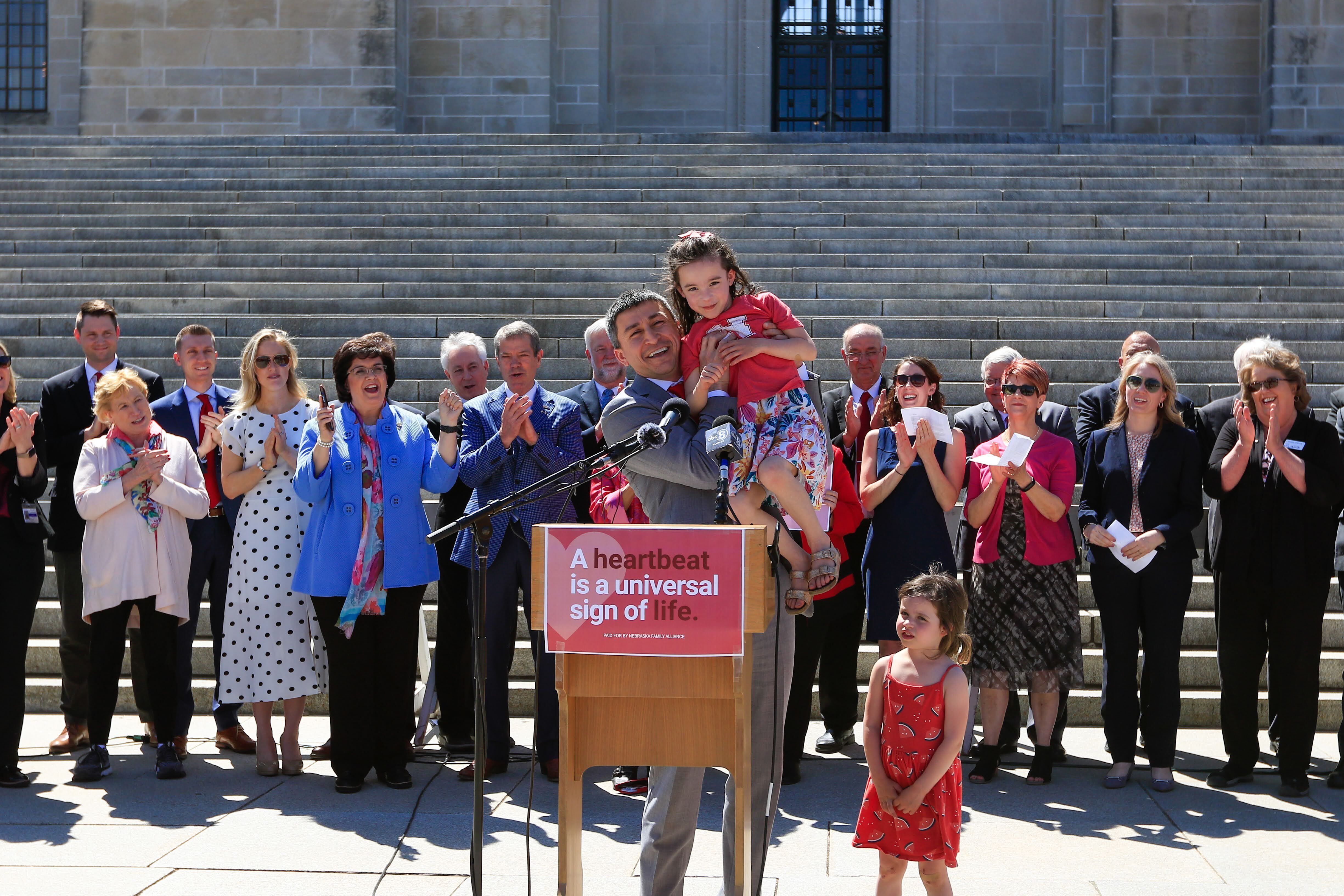
In last week’s column, I reflected on my ten-year anniversary at the Nebraska Catholic Conference. I talked about the NCC as my dream job and shared the top three reasons my work is fulfilling. Those 800 words didn’t give me enough room, however, to reflect on the major public policy victories we’ve accomplished under the leadership of the Bishops these last ten years.
A Dream Job. Like most Catholics, I didn’t know the Nebraska Catholic Conference existed for a good chunk of my life. I had no idea the Church had a government relations and lobbying arm devoted to applying the Church’s social teaching to public policy matters.
The line between good and evil within the human heart is a thin one. Each of us must remain vigilant over our heart, as well as the hearts of our brothers and sisters, so that we might strive for what is good and true and beautiful.
Through Catholic social teaching, we recognize the fundamental moral principles required of building a just society, one that respects human dignity, honors subsidiarity, fosters solidarity, and seeks the common good.


